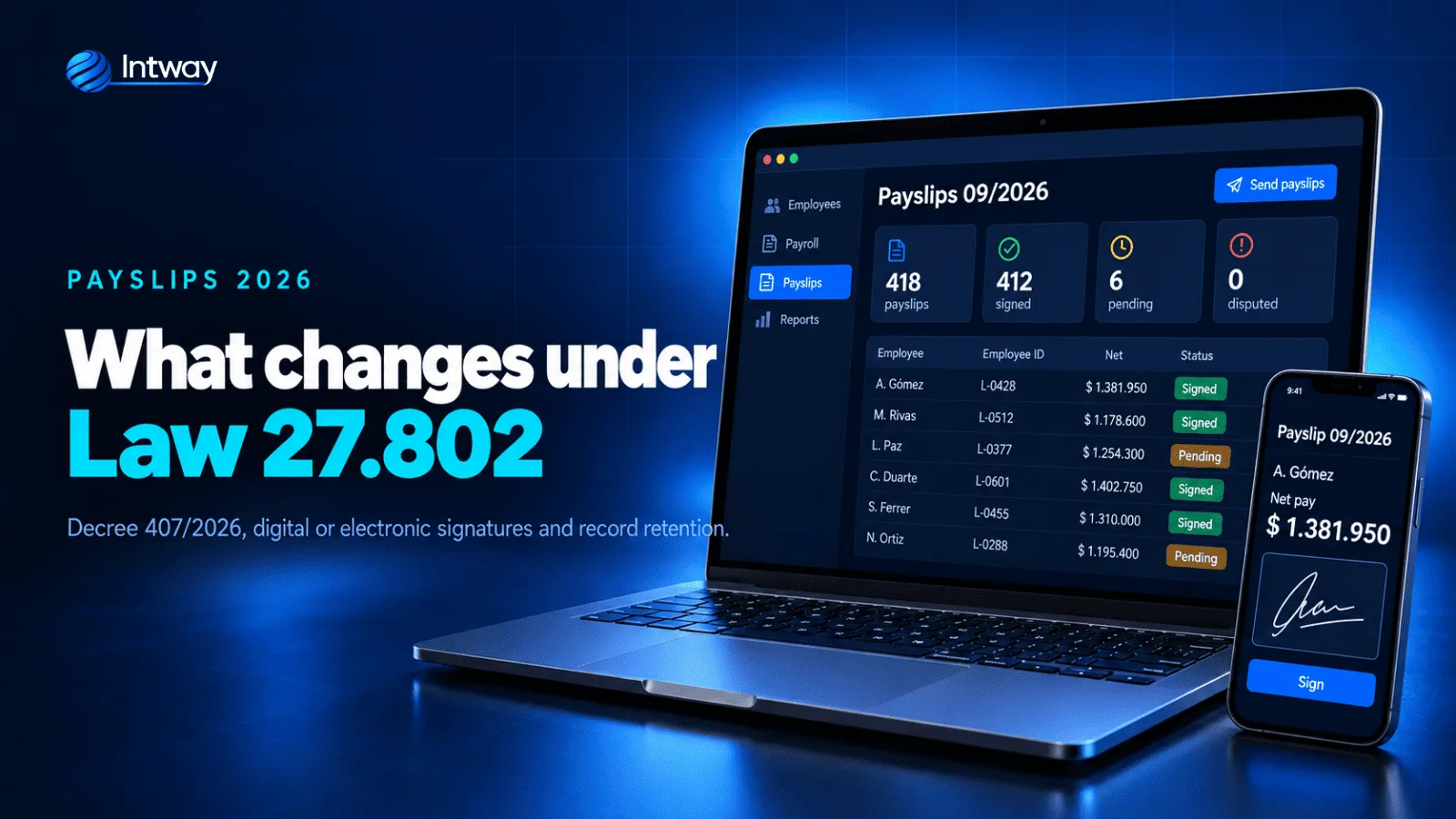
Since March 2026, payslips in Argentina follow new rules. Law 27,802 on Labour Modernisation rewrote articles 139, 140 and 143 of the Employment Contract Law (LCT): it removed the two-copy paper requirement, expressly admitted digital or electronic signature as proof of delivery, made employer contributions a mandatory line on the payslip and set retention periods. Three months later, Decree 407/2026 regulated article 140 with a single mandatory payslip model, in force since 1 June 2026.
For a company the impact is not only legal: the payroll system has to produce a payslip with a different structure, delivery can stop being paper-based and the archive becomes digital for ten years. This guide explains what changed, what each rule requires, how to choose between digital and electronic signature, and how to adapt your payroll and payslip-delivery system without disrupting operations.
In this guide you will find:
- What changed in articles 139, 140 and 143 of the LCT.
- The four mandatory sections of the Decree 407/2026 model.
- What the digital payslip requires today and what still applies from Resolution 346/2019.
- Digital versus electronic signature: differences and which one to choose.
- How to adapt the payroll engine, the employee portal and the archive, step by step.
- Checklist, common mistakes and frequently asked questions.
What changed in the Argentine payslip in 2026
Law 27,802 was published in the Official Gazette on 6 March 2026. Its articles 38, 39 and 40 replace the three LCT articles that govern the payslip:
- Article 139 (format and delivery). Employers no longer have to issue the payslip in duplicate and get the copy signed. The employer prepares the payslip and delivers to the worker "a faithful copy of the original if on paper, or through a system that allows it to be signed digitally or electronically as proof of delivery". It is the first time the LCT names the digital payslip in those words.
- Article 140 (minimum content). It keeps the list of mandatory data and adds item j: the payslip must include "the contributions and/or items paid by the employer", with the specific amount for each worker. The enforcement authority may require additional data.
- Article 143 (retention). The employer keeps payslips and payment records for the limitation period: two years for labour obligations and ten years for social-security obligations. They may be digitised, and the digital archive has "the same validity as the paper format".
These three articles are in force: they were not part of the injunction the CGT union obtained in March against other articles of the law, and that injunction was lifted in April 2026. Even so, before changing a payroll circuit it is wise to validate the approach with the company's labour counsel.
The mandatory model under Decree 407/2026
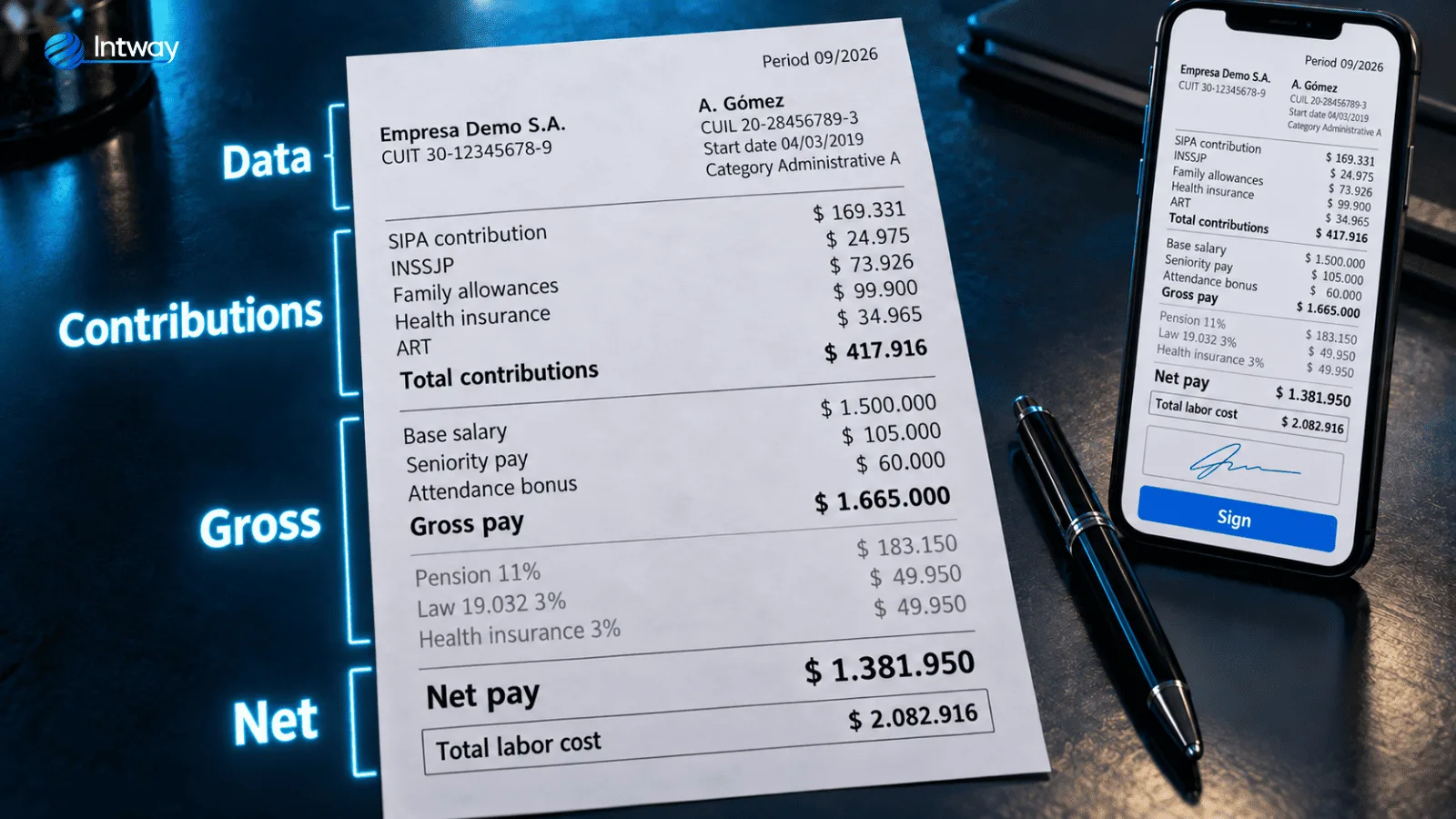
Decree 407/2026, published in the Official Gazette on 1 June 2026, regulates article 140 in article 5 of its Annex I and publishes the payslip model in Annex III. It applies from publication and sets no adaptation period: payslips issued from June onwards should follow it. The payslip "must be structured in four clearly differentiated sections":
- Employment data. Employer tax ID (CUIT), worker ID (CUIL), start date, seniority, category, and date and place of payment of social-security charges.
- Employer contributions. Every item the employer pays by law or collective agreement, with its amount. The total of this section is shown before gross pay is determined.
- Gross pay. With its calculation and the deductions applied.
- Net pay. What the worker actually receives.
Three further rules in the same article change how the payroll engine must calculate: every item shows its "calculation base, unit of measure and resulting amount"; lump sums (for example a collective-agreement contribution paid for the whole workforce) are prorated on each individual payslip; and the front of the payslip carries a labour-cost summary with, at minimum, union, social security, health insurance, INSSJP, workers' compensation (ART), business chambers and other items.
Digital payslip: what the law requires and what still applies from Resolution 346/2019
Until 2026 the digital payslip rested on Resolution 346/2019 of the then Ministry of Production and Labour, which repealed the prior-authorisation regime of Resolution 1455/2011. Since then employers choose whether to issue on paper or digitally, with no permission required, as long as they comply with articles 138 to 140 of the LCT and, where applicable, Law 25,506 on digital signature. The resolution adds two operational requirements that remain the benchmark for any system: the worker must be able to sign the payslip, including under protest, and must be able to keep their payslips and download copies.
What Law 27,802 changed is the rank of the rule. Now the LCT itself admits "digital or electronic signature as proof of delivery" and recognises the validity of the digitised archive. The years-long debate over whether an electronic signature was enough for the payslip has been settled by statute: it is, as long as the system can prove who signed and what they signed. The direction is clear too: for domestic workers, ARCA already issues an exclusively digital payslip from May 2026 wages onwards (General Resolution 5850/2026).
Digital or electronic signature: which one for the payslip
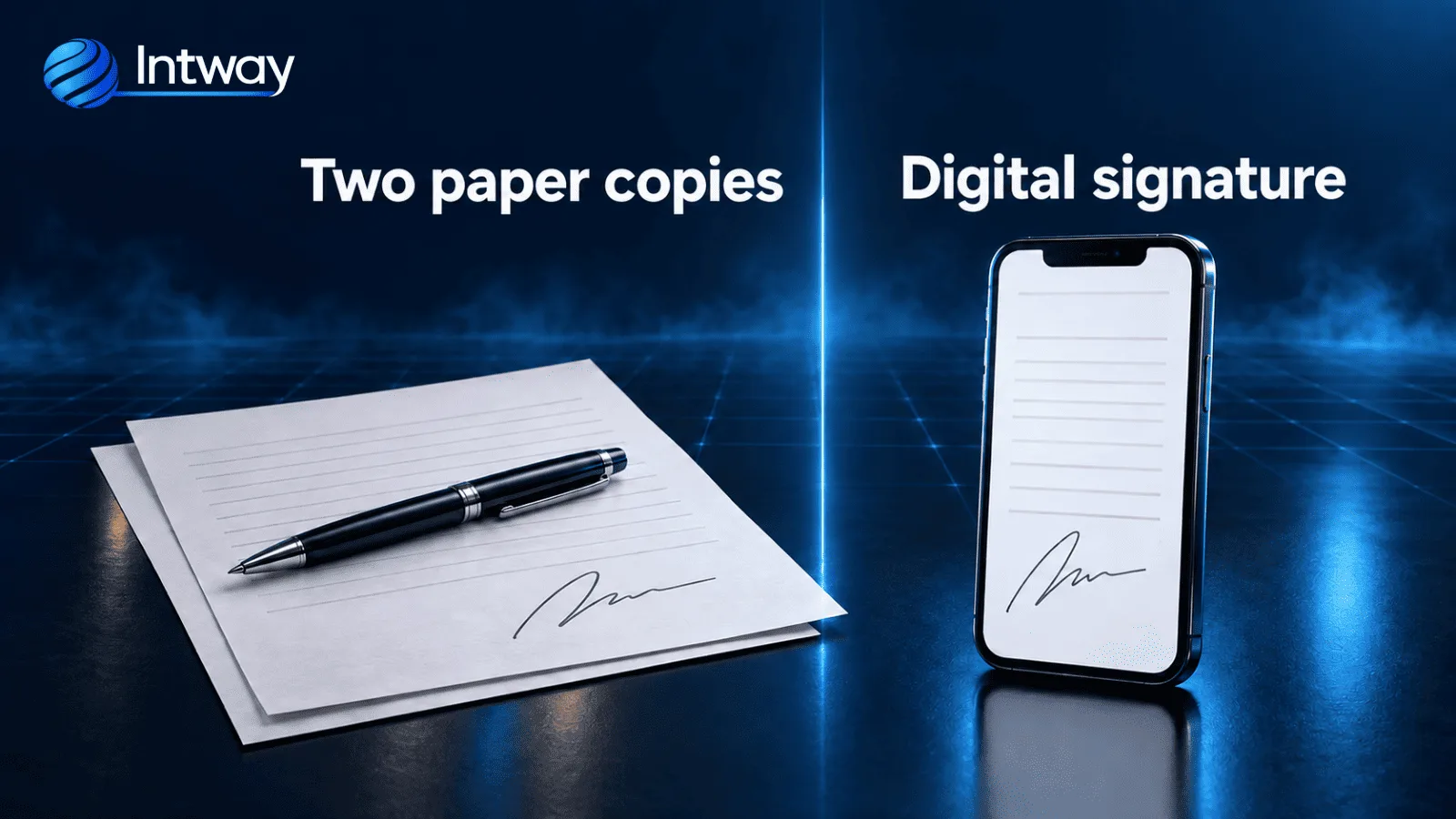
Law 25,506 defines two different things. A digital signature (article 2) is the result of applying a cryptographic procedure to the document with a certificate issued by a state-licensed certification authority; the law presumes, unless proven otherwise, that the signature belongs to the certificate holder and that the document was not altered (articles 7 and 8). An electronic signature (article 5) is any set of data attached to the document that the signer uses as a means of identification and that does not meet all the requirements of a digital signature; if someone disputes it, the party relying on it must prove it is valid.
| Digital signature | Electronic signature | |
|---|---|---|
| What the employee needs | A certificate from a licensed authority (token or remote digital signature) | Username and password, SMS or email code, on-screen stroke, biometrics |
| In a dispute | Authorship and integrity are presumed; whoever denies it must prove it | The employer must prove who signed and that the document did not change |
| Friction and cost | High: a certificate per person, renewals, support | Low: adopted in days and works from a phone |
| When it makes sense | Workforces with high litigation or a corporate policy that requires it | Most companies, provided the system keeps strong evidence |
In practice, what decides a case is not the name of the signature but the evidence behind it. A well-built electronic-signature system stores, for each payslip: the employee's verified identity at the moment of signing, the hash of the signed PDF, a timestamp, the IP address and device, and a log of every status (sent, read, signed, signed under protest). With that, the burden of proof under article 5 is met with a report. If company policy requires a digital signature, the circuit is the same and only the signing module changes.
How to adapt your payroll and payslip-delivery system
The adaptation has two fronts that are best kept separate: the content of the payslip (what Decree 407/2026 requires) and the delivery and archiving circuit (what articles 139 and 143 enable). The payroll engine solves the first; a signature and document-management portal integrated with it solves the second.
- Assess the starting point. Which payroll system the company uses (Tango, Bejerman, SAP, Visual Sueldos, an in-house application), the format the payslip comes out in today, where employer contributions and collective-agreement items are configured, and how many payslips are delivered per month and per site.
- Adapt the model. Redesign the template with the four sections of Annex III, with calculation base, unit and amount per item, the employer total before gross pay, the proration of lump sums and the labour-cost summary on the front. Validate one payslip per collective agreement against the model before running the month.
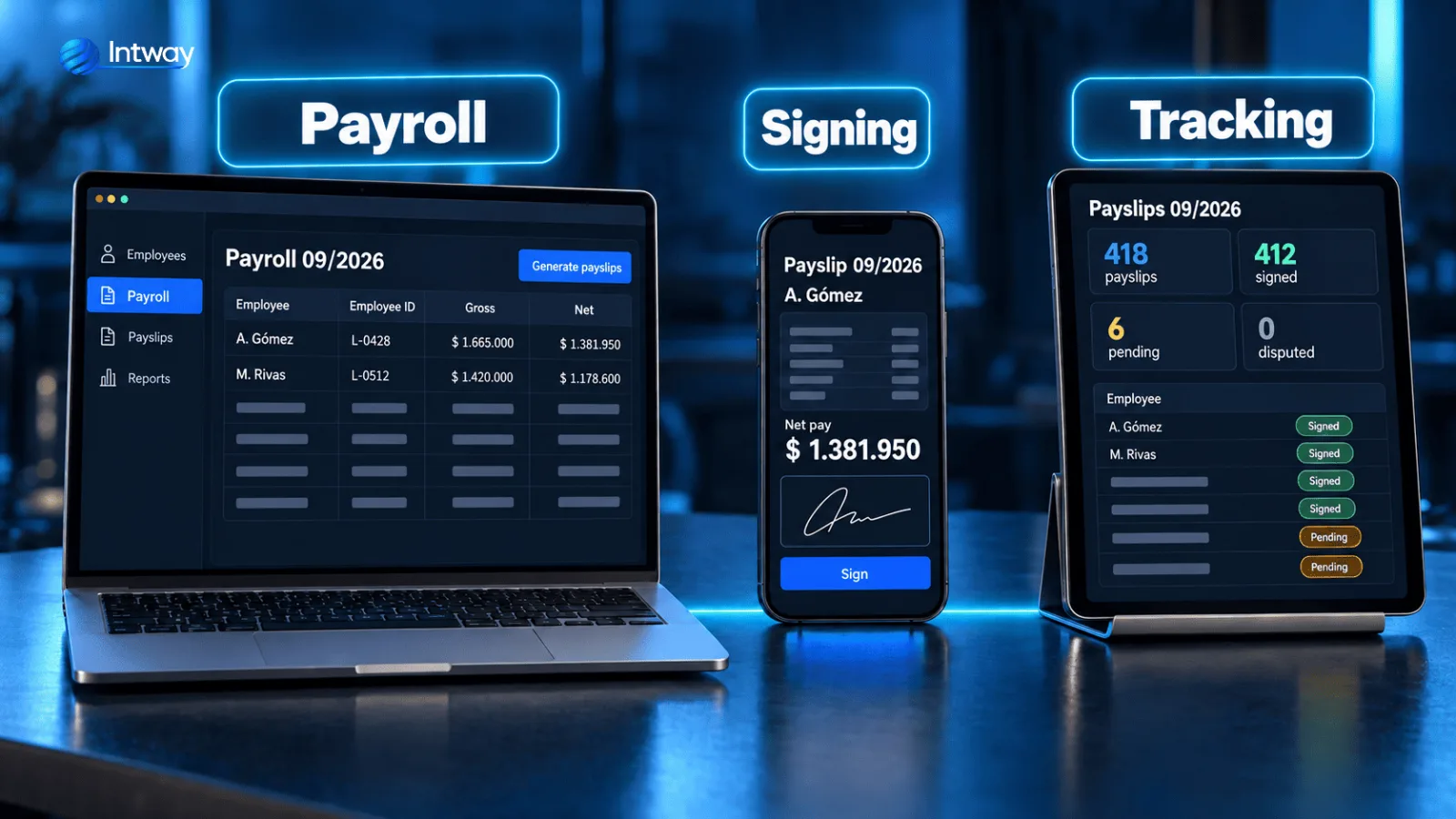
- Choose the signature and the employee portal. Decide on electronic or digital signature using the table above. The portal must work from a phone, allow signing in agreement or under protest, let each payslip be downloaded and show the full history, as Resolution 346/2019 requires.
- Integrate the circuit. Payroll engine, PDF generation per employee, bulk sending, notification, signature, proof of delivery and archive. Integration can be via API or by importing a batch of PDFs per period; what matters is that there are no manual steps between payroll and delivery, and that the employee file, updates, hires and terminations are synchronised in one place.
- Retain and audit. An archive with ten-year retention, hash and timestamp per document, reports of sent, read and signed items, and an export ready for an inspection or a lawsuit. If paper payslips from earlier periods still exist, article 143 allows them to be digitised with the same validity.
Checklist for running next month's payroll with the new payslip
- The payslip has the four Annex III sections, in that order.
- Every item shows calculation base, unit of measure and amount.
- Employer contributions appear with an amount per worker and their total sits before gross pay.
- Lump sums are prorated on each payslip.
- The front includes the labour-cost summary with the minimum items.
- The employee can sign in agreement or under protest and download their copy.
- Each signature stores identity, hash, timestamp, IP and device.
- The archive retains ten years and exports reports per employee and per period.
- The change of circuit was communicated to staff and validated with labour counsel.
Common mistakes
- Emailing the PDF and treating it as delivered. Email proves sending, not delivery or acceptance. Without a signature and a read log there is no proof.
- Signing a PDF with no audit trail. A signature image pasted on the document, with no hash or timestamp, cannot prove the file was not altered.
- Not allowing signature under protest. If the system only has an "accept" button, an employee who disagrees will not sign, and the company is left without proof of delivery.
- Showing employer contributions as a single total. Item j requires the amount per item and per worker, and the decree requires the calculation base of each one.
- Adapting the template but not the calculation. Prorating lump sums and the labour-cost summary are new figures the payroll engine has to compute, not just display.
- Forgetting old payslips. The social-security retention period is ten years. A system change that does not migrate the historical archive leaves a gap at inspection time.
How Intway can help
We have spent years building the end-to-end payroll circuit for Argentine companies, and we treat the 2026 change as an extension of that work:
- With our digital signature system for payslips and documents, employees sign from their phone, every document keeps its read and signed status, and HR sees in real time who is missing. It is multi-company, sends in batches and integrates with the payroll system you already use.
- We built a face-recognition time and attendance system that more than 300 companies use to run payroll straight from the clock-in.
- We replaced a Visual Basic payroll engine with a multi-country cloud platform without stopping the monthly run.
- If your payroll is an in-house application or a custom ERP, we adapt the Decree 407/2026 model, the contribution calculations and the archive, and connect it to the signature portal.
If you have already adapted invoicing to the ARCA changes, the approach is the same one we describe in our guide on Argentina's e-invoicing rules for 2026: understand what the rule requires, touch the system once and leave the circuit automated.